
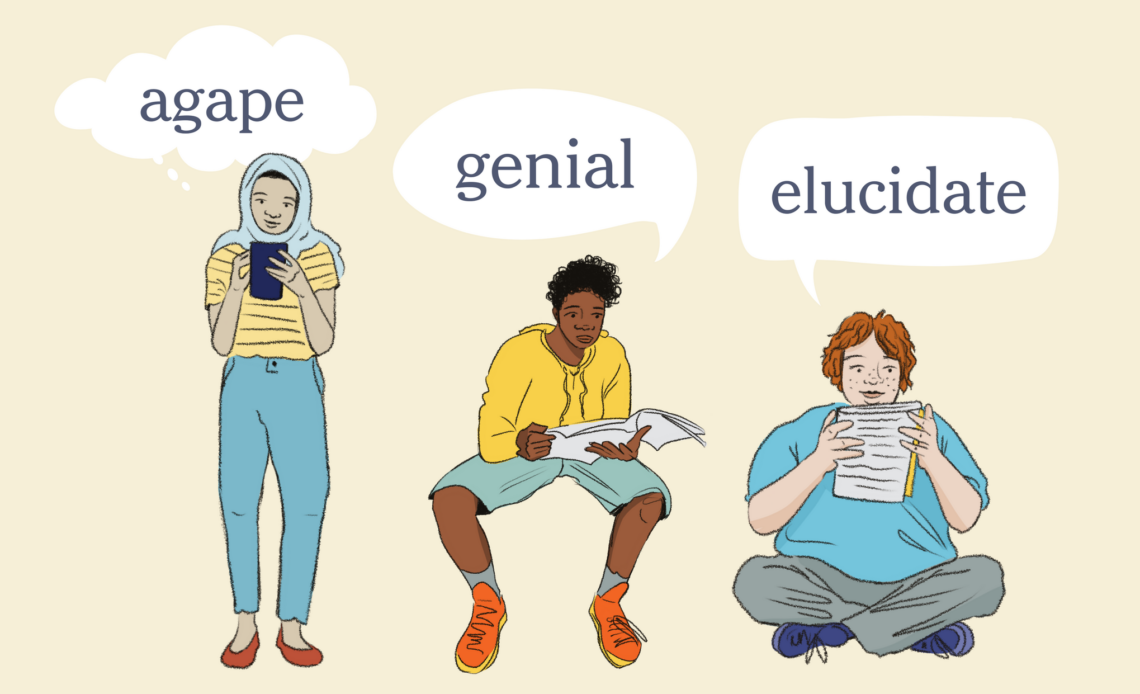
The Best Ways to Learn Vocabulary are not the same methods most people use in school. Many learners write a word, write the definition, and repeat until the test. It works just long enough to pass, then the words evaporate. If this sounds familiar, the problem is not your memory. It is the method.
The most effective ways to learn vocabulary are spaced repetition (reviewing words at increasing intervals), learning in context rather than from isolated lists, actively using new words in writing and speech, and building connections between new words and what you already know. These methods are backed by decades of cognitive science research and produce retention rates several times higher than rote memorization.
Why Traditional Word Lists Don’t Stick
When you memorize a word in isolation – ‘ephemeral: lasting a very short time’ – your brain stores it in short-term memory without connecting it to anything meaningful. Without retrieval practice and context, it fades within 24-48 hours.
The brain retains information when it’s connected to emotion, narrative, pattern recognition, or existing knowledge. A word you encountered in a novel you loved, or used in a heated argument, or connected to a word you already know – that word stays.
Top 8 Most Effective Vocabulary Learning Methods
| Method | How It Works | Best For | Difficulty |
|---|---|---|---|
| Spaced Repetition | Review words at calculated intervals that maximize long-term retention | Any language, any level | Easy to start |
| Contextual Reading | Encounter words in real reading material; infer and confirm meaning | Intermediate+ learners | Medium |
| Active Production | Force yourself to use new words in writing or conversation within 24 hours | All levels | Requires effort |
| Word Root Study | Learn Latin/Greek roots – ‘port’ (carry) unlocks transport, portable, export | English vocabulary depth | Medium |
| Mnemonics / Memory Hooks | Create vivid mental images or stories linking a word to its meaning | Difficult or abstract words | Creative effort |
| Vocabulary Journals | Write new words in context, with a personal example sentence | All levels | Consistent habit |
| Input Flooding | Consume massive amounts of comprehensible content in target language | Language learning | Time-intensive |
| Teaching Others | Explain a word’s meaning to someone else – forces deep processing | All levels | Requires partner |
Spaced Repetition: The Most Powerful Tool You’re Probably Not Using
Spaced repetition is a study technique where you review material at increasing intervals – not every day, but in a pattern that forces your brain to retrieve the memory just before it fades. Each successful retrieval strengthens the memory trace and pushes the next review further into the future.
The result: you spend less time studying while retaining far more. Research shows spaced repetition can produce 200-300% better long-term retention compared to massed practice (cramming).
- Anki – free, open-source, highly customizable, desktop and mobile. The gold standard.
- Quizlet – more beginner-friendly, gamified, large library of shared decks
- Clozemaster – context-based SRS for language learners (fill in the blank format)
- Duolingo – uses mild spaced repetition built into its lessons (good for casual learners)
For best results with Anki: create your own cards rather than downloading pre-made decks. The act of making the card is itself a learning event.
Learning Vocabulary Through Reading – The Right Way
Extensive reading in your target language (or in English, if building vocabulary) is the highest-volume vocabulary acquisition method available – but only if done correctly.
- Read material that is 95-98% comprehensible – you should know almost all the words. This is the ‘sweet spot’ for acquisition.
- When you hit an unknown word, try to infer the meaning from context before looking it up
- Look up only the words that recur or seem important – looking up every single word breaks the reading flow and slows acquisition
- After reading, add the most useful unknown words to your spaced repetition deck
- Read widely across topics – specialized vocabulary lives in specific domains
How Many Words Do You Actually Need?
| Level | Vocabulary Size (English) | What You Can Do |
|---|---|---|
| Basic Survival (A1-A2) | 500-1,000 words | Basic needs, simple conversations, survival situations |
| Conversational (B1) | 2,000-3,000 words | Everyday topics, news headlines, simple books |
| Functional Fluency (B2) | 5,000-8,000 words | Most conversations, professional emails, novels |
| Advanced (C1) | 10,000-15,000 words | Nuanced expression, academic texts, idiom-rich conversation |
| Native-Like (C2) | 20,000-40,000 words | Full register flexibility, humor, cultural references |
| Educated Native (passive) | 50,000-80,000 words | Recognize most written language including archaic forms |
Best Apps and Tools for Vocabulary Building
| Tool | Best For | Cost |
|---|---|---|
| Anki | Deep long-term retention, customizable | Free (mobile $24.99 one-time on iOS) |
| Quizlet | Beginners, group study, gamified practice | Free / $35.99/year for Plus |
| Vocabulary.com | English vocabulary depth with contextual examples | Free / Premium available |
| Magoosh Vocabulary | GRE/SAT test prep vocabulary | Free app |
| LingQ | Language learning through real content | Free limited / $12.99/month |
| Clozemaster | Intermediate/advanced language learners | Free / $8/month |
Daily Habits That Build Vocabulary Naturally
- Read something every day – even 15-20 minutes of reading exposes you to 1,000+ words
- Keep a running list – note interesting words in a phone note as you encounter them
- Use a word of the day app or calendar – low effort, surprisingly sticky
- Watch films or series with subtitles in your target language – passive exposure at scale
- Play word games – crosswords, Wordle, Scrabble actively surface word knowledge
- Try to use one new word per day in conversation or writing – production cements retention
Vocabulary growth is cumulative and slow at first, then suddenly fast. The first 2,000 words feel hard-won. After that, reading itself becomes your teacher – and the learning becomes self-sustaining.