
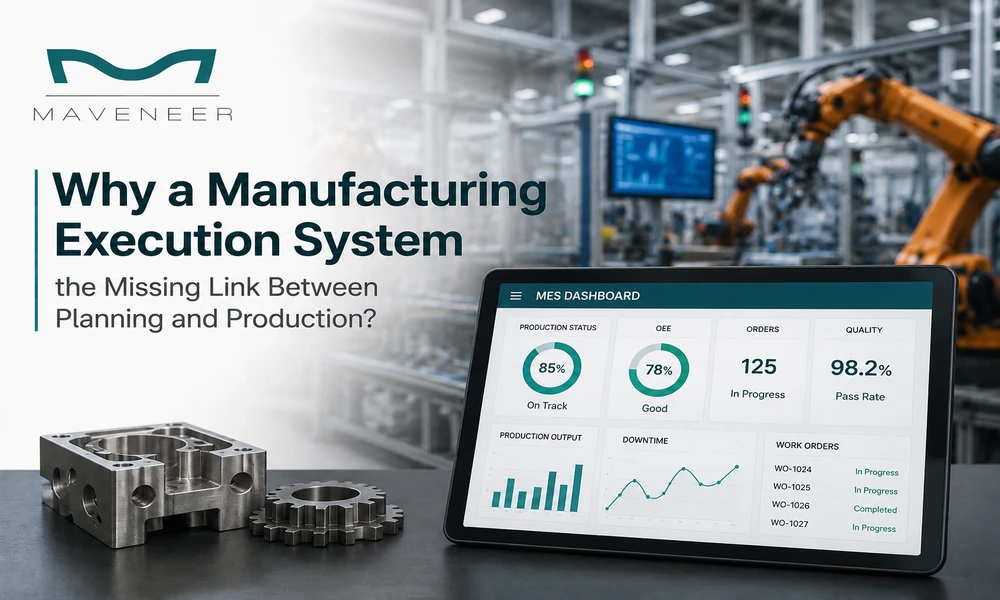
A production schedule may look great on paper, but the real situation on the factory floor is often far removed from that. The machines stop for reasons beyond our control, the raw materials arrive late, and even a small delay can disrupt an entire line. Meeting deadlines is much more difficult when managers cannot see these problems as they unfold.
It’s that gap between planning and real-time production that a manufacturing execution system (MES) really swims in. It links day-to-day operations with real-time, accurate data − empowering manufacturing organizations to respond quickly rather than based on guesswork.
Turning Production Data into Action
There is information flowing from every factory during the course of a day. Jobs are filled by machines, operators document production, and quality is checked at various points. In the absence of a structured system, most of this information is either noted on spreadsheets or kept in manual records.
These updates are pooled in a manufacturing execution system so production teams can see the real-time picture on the shop floor. Managers no longer have to wait until the end of a shift to learn about delays or quality problems.
They can respond more quickly − while production is still running.
Better Visibility Improves Every Shift
Picture a factory line that suddenly comes off the rails because one piece of machinery starts running slower than normal. But left unattended for a few hours, hundreds of products may be delayed.
Supervisors are able to analyze them almost immediately through a manufacturing execution system that delivers quick access to production data, enabling supervisors more time to diagnose problems before they escalate into larger disruptions. Small improvements in advance helps avoid costly downtimes later.
Having this visibility lends itself to improved planning and a smoother day-to-day operation.
Practical Benefits for Manufacturers
A manufacturing system does not tie up the value of a large factory. Availability of production information is one way that manufacturing businesses of all sizes gain efficiency.
Common advantages include:
- Real-time production tracking
- Improved product quality
- Faster identification of equipment issues
- Better production scheduling
- Reduced manual record-keeping
- Greater inventory accuracy
These improvements enable manufacturers to more effectively utilize their resources and produce finished goods at a consistent pace.
Supporting Quality and Compliance
Almost all industries need to have their production records in detail, otherwise, it may lead to noncompliance with customer requirements or regulatory requirements. Especially when products go through several stages of production, paper-based documentation can become a bit unwieldy.
An automated manufacturing execution system will log all production and provide a record for each batch or product. If there is a manufacturing quality concern, manufacturers can quickly trace materials/ingredients used, production time, and inspection results from the application instead of browsing through manual records.
This level of traceability mitigates risk while enabling continuous improvement.
Building a More Efficient Factory
Modern equipment alone is not the key to a successful factory. It highly depends on correct information and proper timing of decisions. A well-planned manufacturing execution system will give you better visibility into production, control quality, able to respond quickly to changing conditions. Your manufacturing will always continue to get requests and as such in order to run an efficient competitive manufacturing company you need constant insight into the data.