
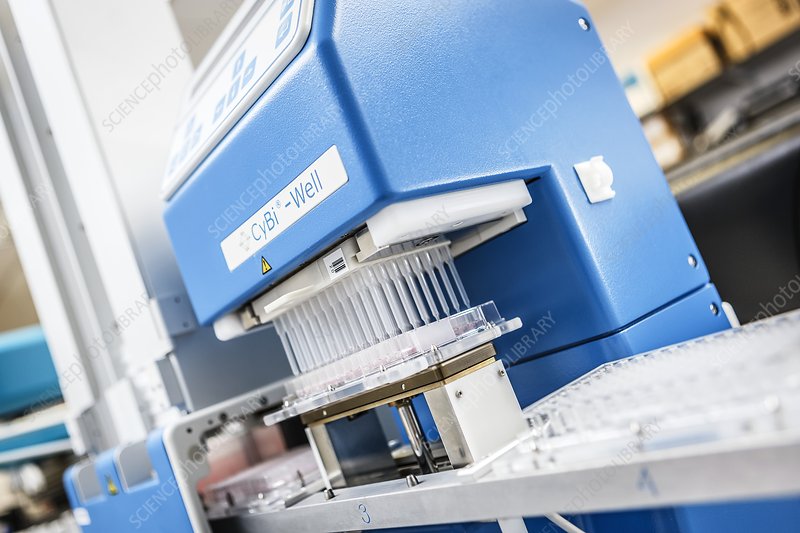
In research and development, time is everything. Whether it’s pharmaceuticals, specialty chemicals, or material science, the ability to test more combinations in less time can dramatically accelerate innovation. That’s exactly what high-throughput screening (HTS) enables — a smarter, faster, and more data-rich way to experiment.
And when it’s paired with multiple reactors working in parallel, labs gain the power to screen dozens of reaction conditions simultaneously, turning weeks of work into days, or even hours.
What Exactly Is High-Throughput Screening?
In simple terms, high-throughput screening is an experimental technique that allows scientists to run many small-scale tests at once instead of one at a time. Originally popularized in drug discovery, it has now found applications across chemistry, catalysis, and process development.
The idea is straightforward — automate and parallelize your workflow so you can explore more reaction variables such as temperature, pressure, catalysts, and solvents, without increasing time or labor.
When paired with multiple reactor systems, this method becomes even more powerful. Instead of waiting for one experiment to finish before starting another, researchers can run dozens of tests side by side under tightly controlled conditions.
The Power of Multiple Reactors in Modern Labs
A multiple reactor setup is essentially a network of small, identical reactors that operate in parallel. Each reactor can simulate unique conditions while sharing common utilities like heating, cooling, and mixing systems.
Here’s why this setup is a game-changer for R&D:
Massive Time Savings:
Traditional single-reactor workflows are inherently slow. With a parallel system, you can test 8, 12, or even 24 different conditions at once, drastically cutting development time.
Consistent Data Quality:
All reactors are exposed to uniform parameters — same stir speed, same pressure, same thermal control — ensuring that variations in results are due to chemistry, not equipment inconsistency.
Precise Control and Monitoring:
Advanced systems allow real-time monitoring of temperature, pressure, and reaction progress. Researchers can fine-tune experiments with mid-run or automate data capture for higher accuracy.
Resource Efficiency:
Smaller sample volumes mean reduced raw material use and less waste — a key advantage for expensive catalysts or rare compounds.
Scale-Up Confidence:
Data gathered from controlled, repeatable mini-reactions help teams predict performance at pilot or production scale with greater reliability.
How High-Throughput Screening Is Revolutionizing R&D
The beauty of high-throughput screening lies in its ability to merge automation, analytics, and innovation. Instead of guessing optimal reaction parameters, researchers can now explore vast condition matrices with statistical precision.
For example:
- In pharmaceutical synthesis, HTS allows rapid screening of catalysts and ligands to identify the best route to an active compound.
- In chemical engineering, process parameters like reaction time and feed ratios can be fine-tuned in parallel to maximize yield.
- In material research, multiple samples can be tested for structural or thermal stability under varying conditions.
By generating large datasets quickly, HTS helps researchers focus on meaningful trends rather than repetitive manual trials.
The Perfect Pair: High-Throughput + Multiple Reactors
When combined, these two innovations unlock the full potential of experimental efficiency. Multiple reactor systems provide the physical backbone for parallel reactions, while HTS techniques supply automation, data analysis, and workflow logic that drive intelligent discovery.
Together, they deliver:
- Faster optimization cycles – drastically reducing time from idea to validated data.
- Smarter decision-making – thanks to richer, statistically relevant datasets.
- Greater innovation throughput – enabling researchers to explore more hypotheses without additional manpower.
It’s the kind of synergy that transforms lab productivity from linear to exponential.
Where the Future Is Headed
As digitalization enters every part of research, the future of high-throughput screening will be even more connected and intelligent. Expect to see:
- Integration with AI/ML – predictive algorithms identifying ideal experimental conditions even before trials begin.
- Automated Sampling Systems – robotics-driven workflows minimizing manual intervention.
- Cloud-Based Data Sharing – global teams accessing real-time results for faster collaboration.
- Miniaturized Reactor Designs – compact yet highly precise setups for microscale testing with industrial-level accuracy.
The goal: make experimentation faster, cleaner, and more insightful than ever.
Final Thought
Innovation thrives on iteration — and high-throughput screening with multiple reactors gives scientists the tools to iterate at lightning speed. By automating repetitive steps, reducing experimental errors, and unlocking massive data potential, this approach is reshaping how R&D teams approach discovery and optimization.
For any lab focused on advanced chemical process development, integrating high-throughput, multi-reactor systems with pressure reactor vessels isn’t just an upgrade — it’s a necessity for staying competitive in the era of accelerated research.