
Washington, DC, is well-known for its beautiful old buildings. Whether it is the bright row houses near the Capitol or the massive Victorian mansions in Georgetown, the city’s character comes from its antique wood.
Lots of neighbors love their 100-year-old oak or pine floors. But these historic details are being targeted by a hidden danger that most people miss.
Powderpost beetles are tiny bugs that eat through solid wood until it turns into a heap of powder. These insects thrive in the muggy weather we get here in the East. Because of that, homes across the District are at high risk for an infestation.
If you worry about your vintage flooring, it might be time to look for professional Washington DC pest control nearby to keep your heritage property safe.
The Hidden Life Inside District Woodwork
To keep your house safe, you need to know how these little pests operate. Powderpost beetles basically use your wood as a crib for their babies. The grown-up beetles look for tiny gaps or holes in raw wood to drop their eggs.
As soon as those eggs hatch, the baby bugs dig way down into your floorboards. These “grubs” spend a long time (sometimes years) eating their way through the wood. This leaves behind a bunch of secret tunnels that rot your floors from the inside.
Since the bugs stay buried deep, you could walk on your floors for a decade and never see them. In the old parts of DC, these beetles find exactly what they need to live and have more babies.
Identifying the Small Exit Holes in DC Homes
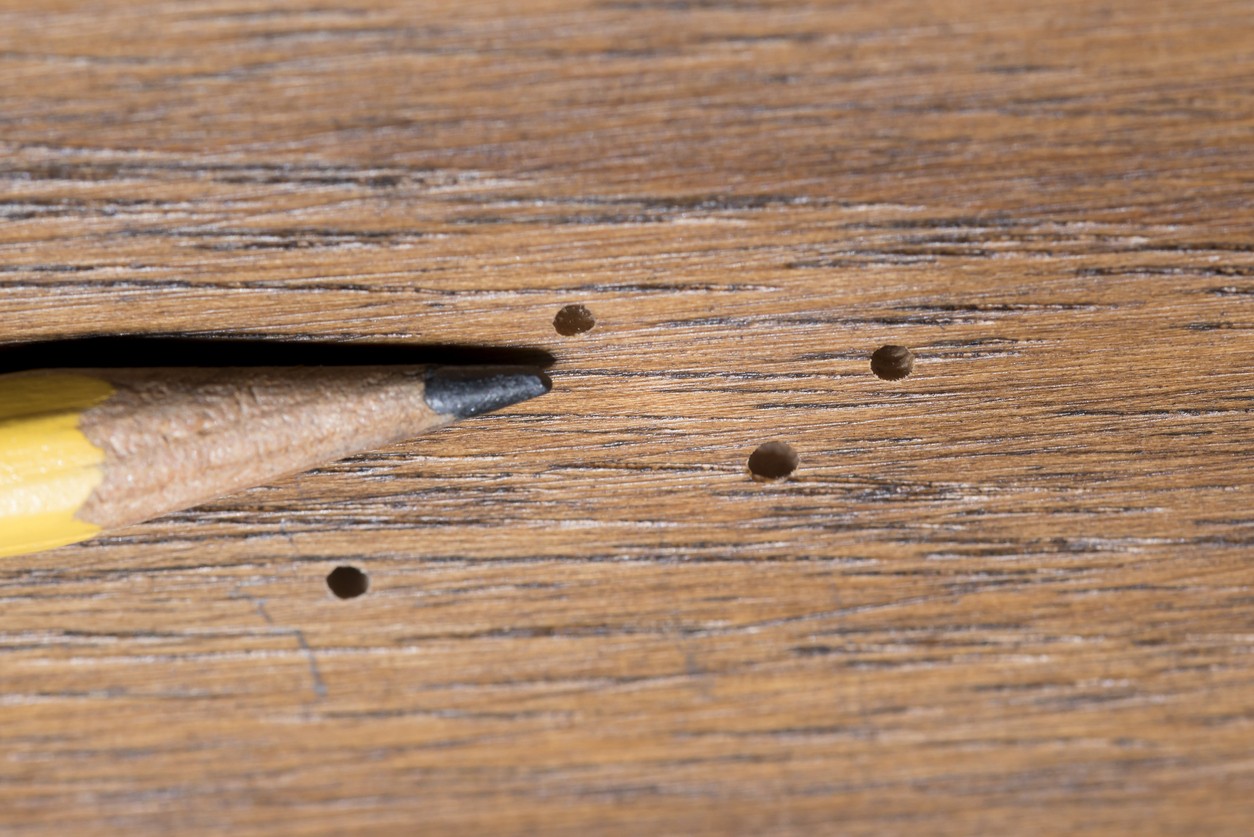
The most common sign of a beetle problem is the appearance of tiny “shot holes.” These holes are usually about the size of a pinhead. They appear when the larvae turn into adult beetles and eat their way out.
If you see a cluster of these small holes in your flooring, it is a clear sign of trouble. In many older DC homes, people mistake these holes for normal wear and tear.
However, fresh holes will have clean and sharp edges. They will not be covered by old paint or floor wax. If you see new holes appearing near your fireplace or in the hallway, the beetles are likely active.
Spotting the Flour-Like Dust on Your Floors
Another major red flag for District residents is the presence of “frass.” Frass is a very fine, powdery substance that looks like flour or baby powder. It is actually the waste left behind by the beetle larvae as they eat.
When the adult beetles leave the wood, they push this powder out behind them. You might find small piles of this dust under a hole or in the cracks between floorboards. In many DC basements, this dust can build up on the overhead beams.
If you wipe the dust away and it comes back, you have an active infestation. This powder is a sure sign that your wood is being damaged right now.
Protecting Your Historic Investment
Dealing with these beetles requires a careful plan. This is especially true when you want to save the original wood in a historic DC home. If you catch the problem early, a simple treatment can often stop the spread.
You should also inspect any old furniture or reclaimed wood you bring into your house. Beetles often hitch a ride on these items. Regularly checking your floors for new holes or powder can save you a lot of money on repairs.
By staying alert, you can make sure your piece of Washington history stays strong for years to come.
If you think your historic floors have an insect problem, Presto Pest Control can help. Their team understands the unique needs of older properties found throughout the District.
They provide detailed inspections to find and stop wood-boring pests before they cause serious damage to your home. Contact them today!